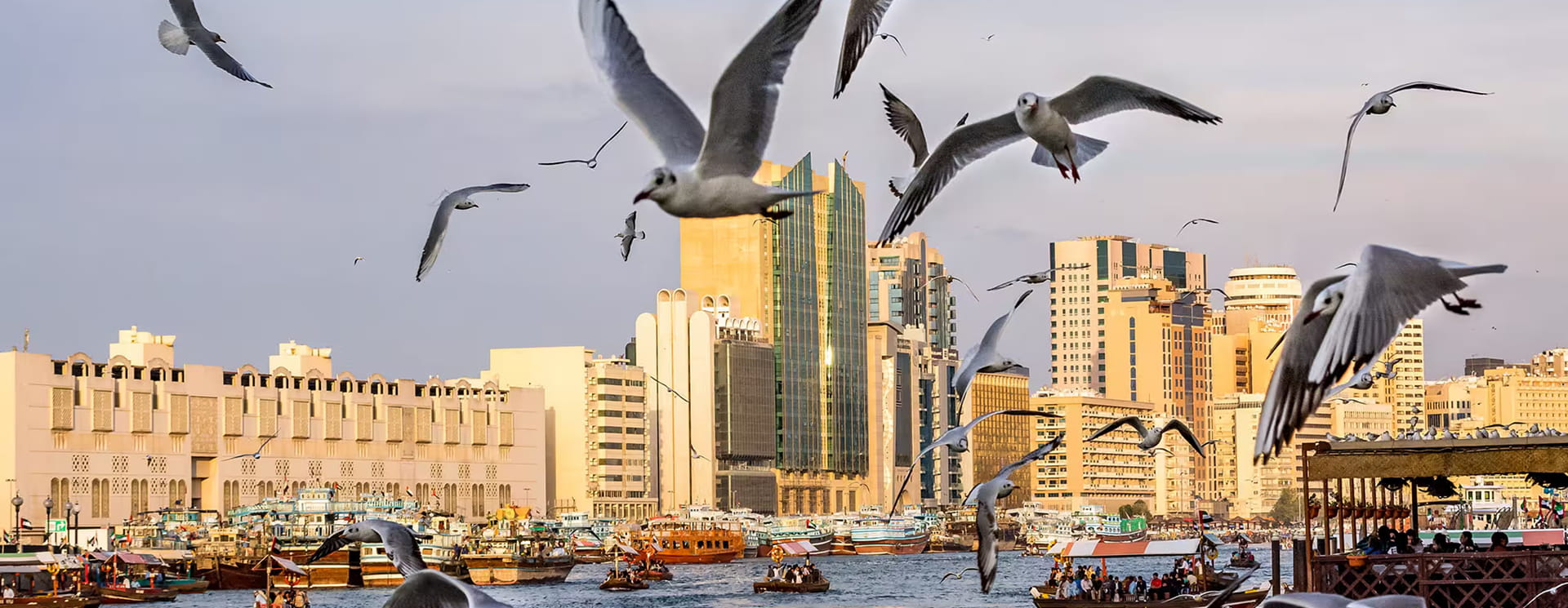
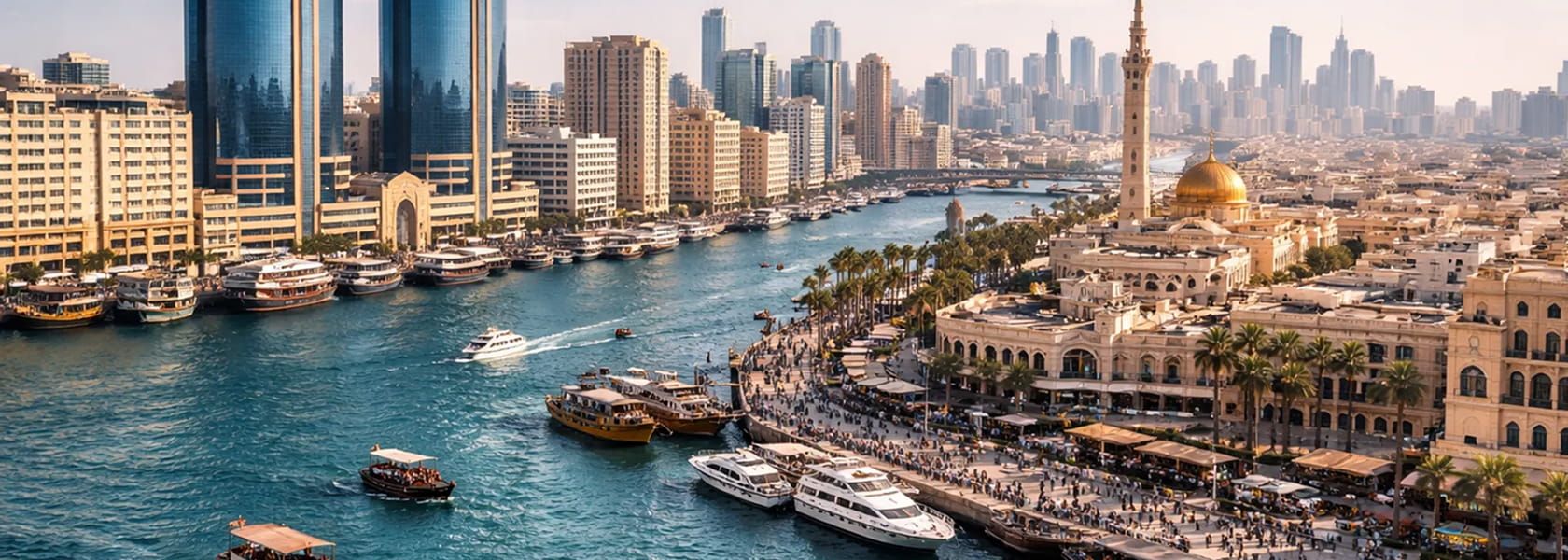
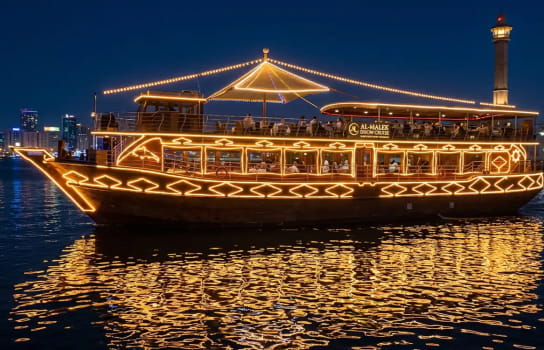
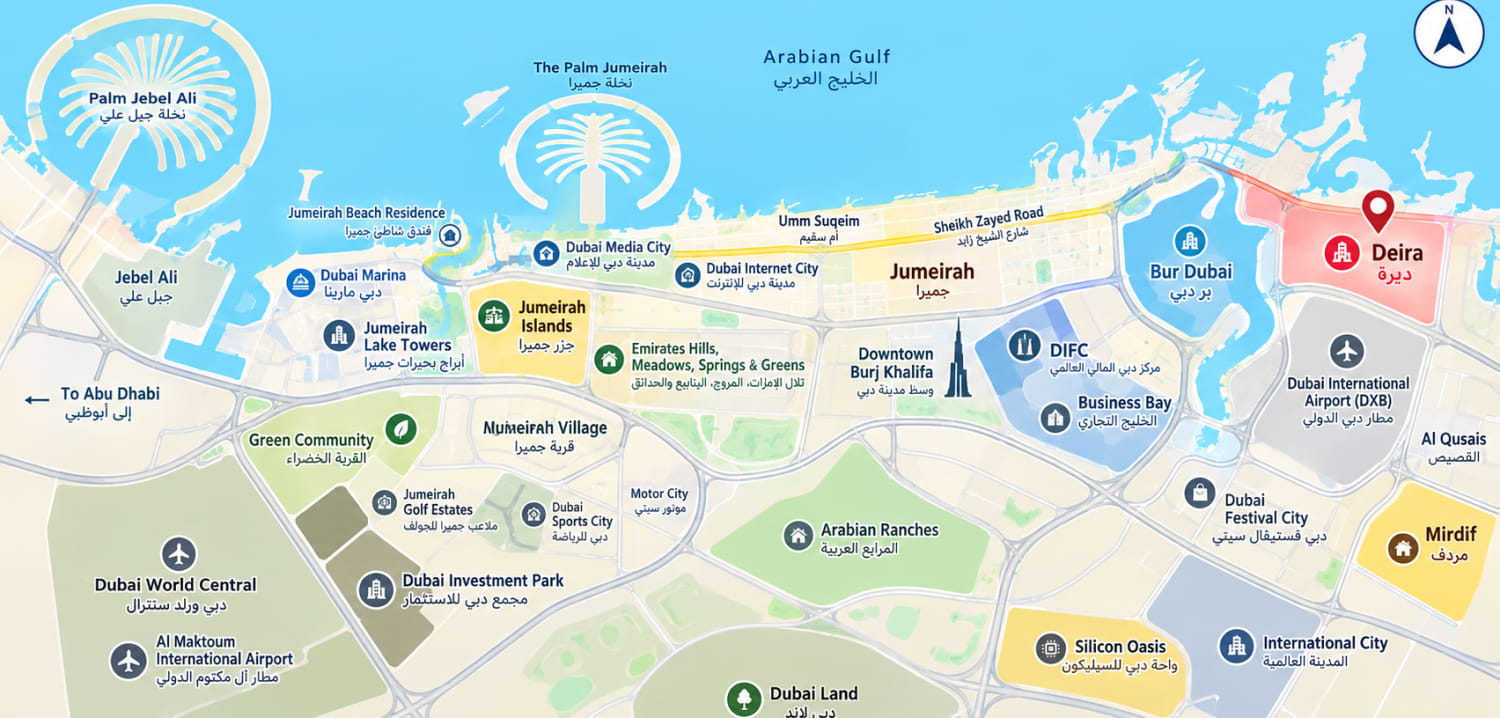
Deira Dubai is one of the city’s oldest and most historically significant districts, sitting on the northern bank of Dubai Creek opposite Bur Dubai. Deira Dubai’s location dates back to the 1700s, giving the area a trading heritage that still defines daily life today, from gold and spices to textiles and perfumes. Much of Deira’s character comes from the creek itself, with the traditional dhow wharfage and the resulting trade still visible along the waterfront.
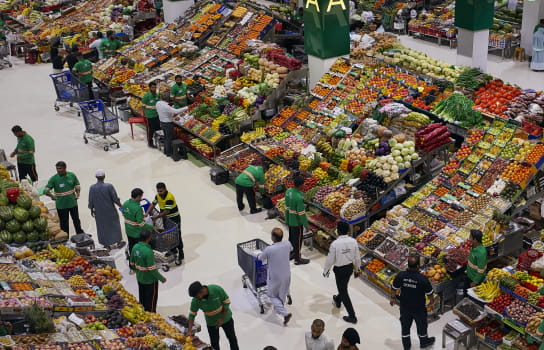
The district divides into several distinct sub-communities, each with its own personality. Al Rigga and Al Muraqqabat are the denser, more commercial pockets with mid-rise apartments above street-level retail, while Abu Hail and Hor Al Anz lean quieter and more residential. Al Mamzar, on Deira’s northern edge, carries most of the district’s villa stock alongside its beach frontage, and Port Saeed offers a mix of residential and commercial space. New markets continue to open as part of the Dubai Islands development just off Deira’s coast, sitting alongside the centuries-old souks that first built the area’s reputation.
Housing in Deira Dubai is overwhelmingly apartments, ranging from compact studios in older buildings to larger 3-bedroom family units in newer blocks, with sizes stretching from around 280 sq. ft. up to 3,000 sq. ft. in towers such as Osha Plaza and Sherina Plaza. Villas are more limited, found mainly in Abu Hail, Al Baraha, Al Wuheida and Al Mamzar, typically on plots of 2,000 to 17,000 sq. ft. with three to eight bedrooms.
Deira Dubai, is a mix of leasehold and freehold. Most apartments across the district are leasehold, while select villa plots in Al Wuheida and Al Mamzar, along with Emaar Towers in Riggat Al Buteen, offer freehold ownership, generally open to GCC nationals. This blend of old and new, combined with some of the strongest rental yields in central Dubai, keeps demand steady from both long-term residents and investors.